Imagine looking up at a bright blue sky and spotting a giant, floating balloon gliding smoothly above a stadium or city. It’s not a bird, a plane, or even a hot air balloon—it’s a blimp! But how do these massive airships float, steer, and stay safe in the sky? Let’s dive into the fascinating world of blimps and uncover the secrets behind how blimps work.

Introduction
Blimps are some of the most eye-catching and mysterious vehicles in the sky. Unlike airplanes or helicopters, they float gently and move without wings or spinning blades. But what exactly makes a blimp rise, and how do pilots control where it goes? In this article, we’ll explore how blimps work, including the science behind their flight, their parts and controls, and their uses today. By the end, you’ll be a blimp expert!
What Is a Blimp?
A blimp is a type of airship—a flying machine that stays up in the air because it’s lighter than the air around it. Unlike rigid airships, which have a metal frame inside, blimps are nonrigid. This means they keep their shape only because they’re filled with gas and don’t have a skeleton inside. If a blimp loses its gas, it becomes floppy and loses its shape.
Blimps are sometimes called “giant balloons with engines,” and that’s not far from the truth. But there’s a lot more to how blimps work than just being big balloons!
The Science of Flight: Why Blimps Float
The secret to how blimps work lies in a simple science fact: some gases are lighter than air. Blimps are filled with helium, a gas that is much lighter than the air around us. When you fill a huge bag (called the envelope) with helium, the entire blimp becomes lighter than the air outside. This is called buoyancy.
Think of it like a boat floating on water. The boat floats because it’s less dense than the water. In the same way, a blimp floats because it’s less dense than the air around it.
Helium vs. Hydrogen
In the past, blimps used hydrogen, which is even lighter than helium. But hydrogen is very flammable and caused some famous disasters, like the Hindenburg. Today, almost all blimps use helium, which is safe and non-flammable.

Parts of a Blimp
To understand how blimps work, let’s look at their main parts:
Envelope:
The huge, balloon-like bag that holds the helium.
Ballonets:
Smaller air-filled bags inside the envelope that help control the blimp’s height and balance.
Gondola:
The cabin or “car” underneath where the pilot and passengers sit.
Engines and Propellers:
These provide the power to move forward, backward, and even turn.
Fins and Rudder:
Like the tail of an airplane, these help steer the blimp.
Mooring Mast:
A tall pole where the blimp is tied down when it’s not flying.
How Blimps Go Up and Down
One of the coolest things about how blimps work is how they rise and fall in the sky. This is controlled by the ballonets inside the envelope.
To Go Up:
The pilot lets air out of the ballonets, making the blimp lighter. The helium pushes up, and the blimp rises.
To Go Down:
The pilot pumps air into the ballonets. This makes the blimp heavier, so it sinks gently.
Pilots have to balance the amount of helium and air carefully to keep the blimp floating at just the right height. This is called achieving neutral buoyancy—not too heavy, not too light.
How Blimps Move and Steer
Blimps don’t just float—they can move forward, backward, and turn. Here’s how blimps work when it comes to movement:

Engines and Propellers:
Most blimps have engines attached to the gondola. These spin propellers, which push the blimp through the air.
Rudder and Fins:
The rudder (a flat piece at the back) helps steer left and right, while fins help keep the blimp stable.
Elevators:
These are small wings that help the blimp go up or down at an angle, kind of like an airplane.
The pilot uses controls in the gondola to manage all these parts, making the blimp glide smoothly through the sky.
What Happens Inside the Blimp?
Inside the envelope, there’s more than just helium. The ballonets play a big role in how blimps work. As the blimp rises, the outside air pressure drops, and the helium inside expands. To keep the envelope from bursting, the pilot pumps air into the ballonets to keep the pressure balanced.
If the blimp needs to descend, the pilot fills the ballonets with more air, making the blimp heavier. It’s a careful balancing act that requires skill and attention.
Real-World Example: The Goodyear Blimp
When people think of blimps, they often picture the famous Goodyear Blimp. This blimp has been flying over sports events and cities for nearly a century, showing off advertising and providing aerial views for TV.
The Goodyear Blimp is a perfect example of how blimps work in real life. It uses helium for lift, has powerful engines for movement, and is controlled by skilled pilots who manage the ballonets and steering fins. Over the years, Goodyear blimps have become icons in the sky, known for their gentle flight and impressive size.
Are Blimps Safe?
Safety is a big part of how blimps work. Today’s blimps use helium, which is much safer than hydrogen. Pilots are trained to handle all kinds of weather, and blimps are designed to land safely even if something goes wrong.
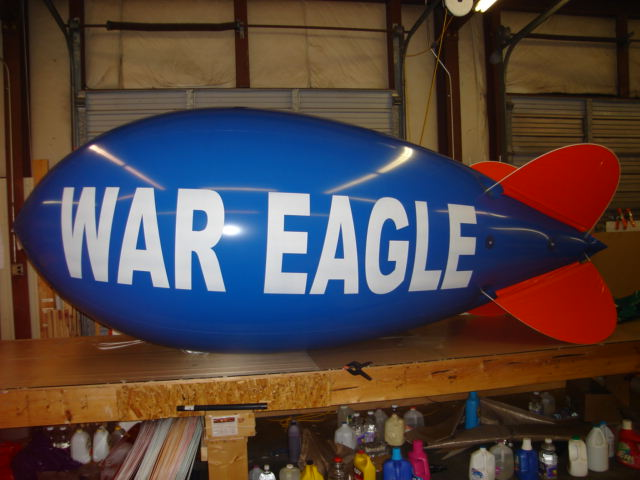
However, blimps are still affected by strong winds and storms. There have been accidents in the past, but modern technology and careful piloting have made blimps much safer.
How Are Blimps Used Today?
You might be surprised to learn that blimps aren’t just for advertising. Here are some ways blimps are used today:
Advertising:
The most common use—blimps fly over big events with logos and messages.
TV and Filming:
Blimps provide amazing aerial views for sports and news.
Surveillance:
Some blimps are used by governments to watch over large areas.
Research:
Scientists use blimps to study weather, wildlife, and even pollution.
Education:
Building model blimps is a popular project in engineering schools, helping students learn about flight and mechanics.
Call us at 1-800-791-1445 or email us at Sales@TexasBlimps.com
How Do You Land a Blimp?
Landing a blimp is a team effort. The pilot brings the blimp down slowly by filling the ballonets with air, making it heavier. On the ground, a crew grabs ropes from the blimp and helps pull it down gently. The blimp is then tied to a tall mooring mast, where it stays until its next flight.

Building and Flying Model Blimps
Learning how blimps work isn’t just for pilots—it’s also a fun project for students and hobbyists. Many engineering schools use blimp projects to teach about mechanics, electronics, and teamwork. Students design, build, and even program small blimps, learning how to balance weight, control movement, and solve real engineering problems.
Fun Facts About Blimps
-The largest blimps can be over 200 feet long—longer than a blue whale!
-Blimps can hover in one place, making them great for filming sports events.
-It takes a whole team to launch, land, and care for a blimp.
-The word “blimp” is thought to come from the sound made when you tap the envelope—“blimp!”
The Future of Blimps
While blimps aren’t as common as airplanes, they still have a place in our skies. New designs are making blimps more efficient and useful for carrying cargo, watching over forests, or even exploring other planets! Some scientists believe blimps could help fight climate change by using solar power and carrying heavy loads without polluting the air.
Conclusion
Blimps are more than just floating billboards—they’re marvels of engineering and science. By using lighter-than-air gases, clever controls, and skilled piloting, blimps can float, steer, and land safely. Whether they’re flying over a football game or helping scientists study the earth, blimps show us the magic of flight in a whole new way.
Next time you see a blimp drifting across the sky, you’ll know exactly how blimps work—and maybe you’ll dream of piloting one yourself!